The evidence suggests digital and paper social stories work about the same, and the format is not the deciding factor. What drives results is whether the story is specific to the student and re-read on a schedule. A 2025 controlled study in Advances in Autism compared phone and tablet delivery against standard printed stories and found both produced substantial gains with no significant difference between formats. A large 2024 school trial found the effect did not hinge on delivery mode either, and a 2025 study pairing stories with interactive VR previews found high engagement, though that format is still emerging rather than proven. So pick the format your student will actually revisit, then spend your energy on specificity. In a 2024 community survey of 16 parents, school SLPs, OTs, and special educators, 94% reported spending 30 or more minutes making one story, and format choice is not where that time should go.
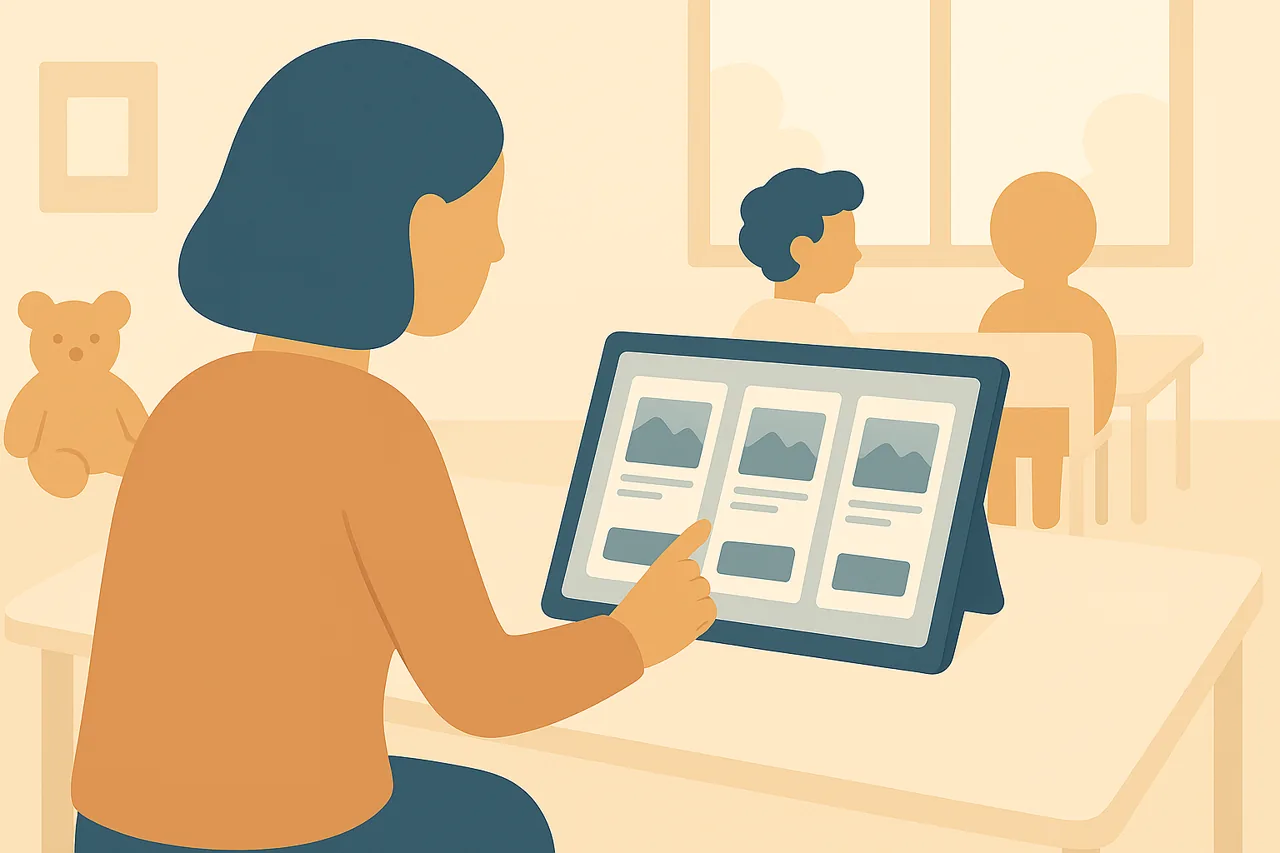
What does the research actually say about digital vs paper?
Two findings matter. First, the 2024 ASSSIST-2 trial, a UK cluster RCT across 87 schools with 249 autistic students aged 4 to 11, found social stories gave a modest, mostly non-significant benefit on broad social responsiveness, and the outcome did not depend on whether the story was digital or printed. Second, a 2023 study of digital social stories delivered through an app found students rated them enjoyable and comprehensible, with the strongest engagement among younger verbal children. Digital did not underperform. It simply added reach.
So what actually makes a social story work?
Across the research, the same two levers show up: individualization and repetition. Social narratives are an evidence-based practice per AFIRM and NCAEP, and a 2024 systematic review of 21 studies found the strongest effects when stories were specific to the student and paired with direct teaching. A story named for this student, this trigger, and this calming strategy, re-read before the situation, beats a polished generic story in either format.
When should you choose paper?
Paper is not the old option. It is the right option in specific cases.
| Situation | Why paper fits |
|---|---|
| A screen distracts the student | No notifications, no temptation to leave the app |
| The student calms by holding and turning pages | The physical routine is part of the regulation |
| The story goes home to a family with limited devices | A printed copy always works |
| K-2 binder routines | A laminated copy lives in the same place every day |
When does digital pull ahead?
Digital wins on narration, replay, and scale. A student who can re-read independently with text-to-speech gets more repetitions without an adult present. And a digital master is easy to duplicate and personalize, which matters when you carry 40 or more students. The 2023 digital study found younger verbal students engaged well on screen, so for that group a digital copy can mean more re-reads, which is the lever that counts.
From the same 2024 survey: "Getting suitable pictures is 90 percent of the work." This is the real digital-vs-paper question for a busy SLP. The format barely moves outcomes, but a digital workflow that drops in pictures fast can move your time-per-story from an hour to minutes.
Does interactivity change the answer?
Interactive stories with narration, taps, or animation can raise engagement, but engagement only helps if it leads to more re-reading and better comprehension. The research does not show that taps alone improve outcomes. Use interactivity as a way to get the student to revisit the story, not as the point. A static PDF that gets read three times before the event beats an animated story opened once. A 2025 Applied Sciences study pairing social stories with interactive VR previews reported high engagement and early social-communication gains for primary students with autism, but the sample sizes are small and the format should be treated as emerging, not a replacement for a specific, re-read story.
What is the practical answer for a school SLP?
Stop optimizing the format and optimize the two levers that move results: make the story specific, and build a re-reading schedule. Then pick whichever format your student will actually return to. Many SLPs keep both: a digital master that is fast to edit and re-send, and a printed copy for the binder and for home.
Frequently Asked Questions
Are digital social stories as effective as paper ones?
The available evidence suggests format is not the deciding factor. A large 2024 UK trial found the effect did not hinge on delivery mode, and a 2023 digital-delivery study found stories were rated enjoyable and comprehensible on screen. What drives results is whether the story is specific to the student and re-read on a schedule.
When is a paper social story the better choice?
Paper wins when a screen is a distraction, when the student needs to hold and turn pages, when the binder is part of a calming routine, or when the story goes home and the family has limited device access. Many K-2 classrooms keep a printed, laminated copy for exactly these reasons.
When does a digital social story help more?
Digital helps when you want narration, replay, or a student who re-reads independently. It also scales: a digital story is easy to duplicate, personalize, and re-send across a caseload. A 2023 study found digital stories were especially engaging for younger verbal students.
Does an interactive story work better than a static one?
Interactivity can raise engagement, but the research does not show that taps or animations alone improve outcomes. Engagement helps only if it leads to more re-reading and better comprehension. Use interactivity to get the student to revisit the story, not as the goal itself.
Is a digital social story FERPA-safe?
It can be, if you keep it inside district-approved tools. Treat the file as a student record: store it in your district drive, use the student's first name only, and avoid pasting identifiable details into consumer AI products without district sign-off. The format is not the risk. Where the data lives is.
Should I print a digital story or keep it on a device?
Many SLPs do both: a digital master for easy editing and re-sending, and a printed copy for the binder and for home. The master stays current, and the print copy is always available when a device is not.
Is VR or interactive digital worth trying? (Updated July 2026)
It may be, for the right student, but treat it as emerging rather than proven. A 2025 Applied Sciences study pairing social stories with interactive VR previews found high engagement and early social-communication gains in primary students with autism. That is promising, not conclusive, so a static digital or paper story remains the reliable default.
Has anyone tested this head to head with older students? (Updated August 2026)
Yes. A 2025 controlled study in Advances in Autism compared digitally mediated social stories delivered on phones and tablets against standard printed stories for teaching social norms to autistic adolescents. Both formats produced substantial improvement in social comprehension and behavior, with no significant difference between them. That extends the same conclusion beyond the K-5 studies, so a district that has already standardized on one format has little reason to switch.
One approach for school SLPs short on time is to keep a 5-tool stack: a methodology checklist for the sentence ratio, a slide template you reuse, a folder of stock photos sorted by scenario, an AI text drafter (ChatGPT, Claude, MagicSchool, or Emoquest for one-sentence-in story output), and a delivery format your district already uses (Google Slides for digital, PDF for print). The format is a preference. The specificity and the re-reading are the intervention.