A social story for asking to join a recess game gives the student one short script to walk up and ask, plus a plan for hearing no. Build it in four to six pages: the playground, the words to use, what a yes looks like, what a no looks like, and the next move. In a 2024 community survey of 16 parents, school SLPs, OTs, and special educators, 94% reported spending 30 or more minutes on a single story, so a reusable recess scaffold saves real time across your caseload. One caveat worth naming up front: the story teaches the words, but the peers matter too. A 2024 peer-mediated intervention study of autistic elementary students found significant gains in recess social integration (more conversations, appropriate joking, and peer interactions) when classmates were coached to include them, so pair the student's script with a little peer coaching where you can. A 2026 randomized controlled trial of 43 young autistic children adds the other half: stories delivered on a fixed twice-weekly schedule produced significantly greater gains in initiating interaction and peer interaction than usual care (P<0.001), so the reading schedule matters as much as the script.
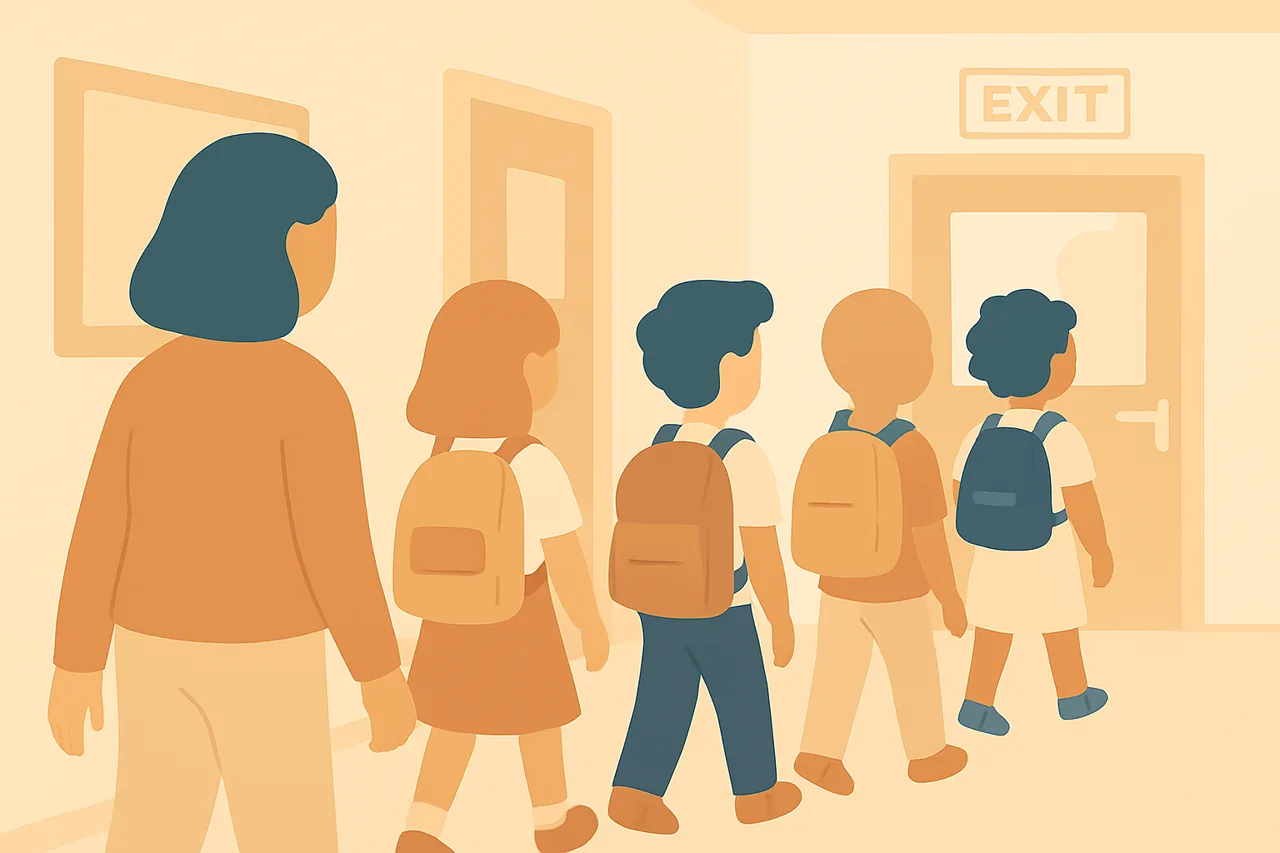
Why is asking to join a game hard for an autistic student?
The hard part is rarely the words. It is the uncertainty of the response. A game is fast, the group is already playing, and the student cannot predict whether the answer will be yes or no. A social story removes that uncertainty by rehearsing both outcomes in advance, so the playground holds no surprises the student has not already seen on paper.
What should each page of the story say?
Follow Carol Gray methodology order: describe first, give perspective, then one gentle directive. Each page is one beat.
| Page | Sentence type | What it says |
|---|---|---|
| 1. The playground | Descriptive | At recess, my friends play games like four square and tag. |
| 2. I want to play | Perspective | Sometimes I want to join. It is okay to want to play. |
| 3. The words | Directive (one) | I can walk up and say, "Can I play?" |
| 4. A yes | Descriptive | Sometimes my friends say yes. Then I take a turn. |
| 5. A no | Perspective | Sometimes the game is full. A no is not about me. |
| 6. My next move | Cooperative | If it is a no, I can ask another group or pick a different game. |
Notice the ratio: one directive sentence across the whole story, surrounded by descriptive and perspective sentences. That is the rule rushed stories break. If every page tells the student what to do, it reads as a behavior plan, not a social story.
What exactly should the student say?
Give one line, not a menu. "Can I play?" or "Can I have a turn?" works for most K-5 games. A single script is something the student can memorize and use without deciding in the moment. Practice the same words every time the story is read so they become automatic when the real game is in front of them.
From the same 2024 survey: "Getting suitable pictures is 90 percent of the work." For a recess story, the fastest fix is a photo of the actual playground and the actual game area. A familiar setting helps a K-2 student generalize from the page to the blacktop.
How do you write the page where a peer says no?
This is the page that decides whether the story works. A real no will happen, and if the story has not prepared for it, the no can become a meltdown. Write it in two parts. First a perspective sentence that explains the no is normal: the game is full, or it already started. Then a cooperative sentence that gives the plan: ask a different group, or choose another activity the student likes. The student leaves the story knowing a no has a next step.
Does a social story actually help with peer interaction?
Social narratives are an evidence-based practice per AFIRM and NCAEP, and a 2024 systematic review of 21 studies found the strongest effects for targeted behaviors when stories were paired with direct teaching. For recess, that means the story plus actual practice: role-play asking in your room, then reinforce the attempt on the playground. The story primes. The practice cements.
Frequently Asked Questions
What words should a student use to ask to join a game?
Keep it to one short line the student can memorize, like "Can I play?" or "Can I have a turn?" A social story works best when it gives one script, not a menu. Practice the same line every time so it is automatic on the playground.
How do you handle the part where a peer says no?
Name it directly and give a next move. A perspective sentence explains that sometimes a game is full or already started, and that a no is not about the student. Then a directive offers the plan: ask another group, or choose a different activity. Planning for no is what keeps a real no from becoming a meltdown.
How long should a recess social story be?
Four to six pages, roughly 8 to 12 sentences. Long enough to cover walking up, asking, hearing yes or no, and what to do next. Short enough to read in the two minutes before the student lines up for recess.
Should the story name a specific game?
Name the games the student actually wants to join, like four square or tag. A specific story is the part that works. If the student floats between games, write the steps generically and add a photo of the real playground so the setting is familiar.
When should the student read this story?
Read it before recess, not during. Aim for two or three readings before the first real attempt, then re-read on a schedule until asking becomes routine. A social story is a priming tool, not an in-the-moment prompt.
Is asking to join a game an IEP-worthy goal?
Yes, it is a common pragmatic-language goal for autistic K-5 students. Initiating a peer interaction and responding to a yes or no are measurable social-communication skills. A social story is one support toward that goal, paired with practice and reinforcement.
Does the story work better if the other students are coached too? (Updated July 2026)
Often, yes. A 2024 peer-mediated intervention study of autistic elementary students found that coaching classmates to include a peer produced significant gains in recess social integration, including more conversations and appropriate joking. The student's script tells them how to ask. Briefly prepping a couple of welcoming peers raises the odds the answer is yes.
How often should the student read the recess story? (Updated August 2026)
Twice a week on a fixed schedule, sustained for about six weeks, is the cadence with the most recent trial support. A 2026 randomized controlled trial used exactly that schedule with 43 young autistic children and found significantly greater gains in initiating and peer interaction than usual care. Reading it once the week before recess week is not a dose.
One approach for school SLPs short on time is to keep a 5-tool stack: a methodology checklist for the sentence ratio, a slide template you reuse, a folder of playground photos sorted by game, an AI text drafter (ChatGPT, Claude, MagicSchool, or Emoquest for one-sentence-in story output), and a delivery format your district already uses (Google Slides or PDF). Reuse the recess scaffold for every student who needs it and swap only the names and the photo.