To write a new classroom social story for an autistic K-5 student, answer the four unknowns that drive start-of-year anxiety: the new room, the new teacher, the daily schedule, and what to do when the student feels unsure. Name the teacher, use real photos of the actual room when you can, and end with one concrete coping step. Send it home one to two weeks early so it can be re-read daily, not once. The hard part is rarely the writing, it is the time: in a 2024 community survey of 16 parents, school SLPs, OTs, and special educators, 94% spent 30 or more minutes on a single story, which is why August stories so often arrive late. A 2024 study of primary-school transitions for autistic students found that successful moves depend on individualized planning and school-home collaboration, and that teacher support and parent concerns often do not line up, which is exactly the gap a shared social story helps close.
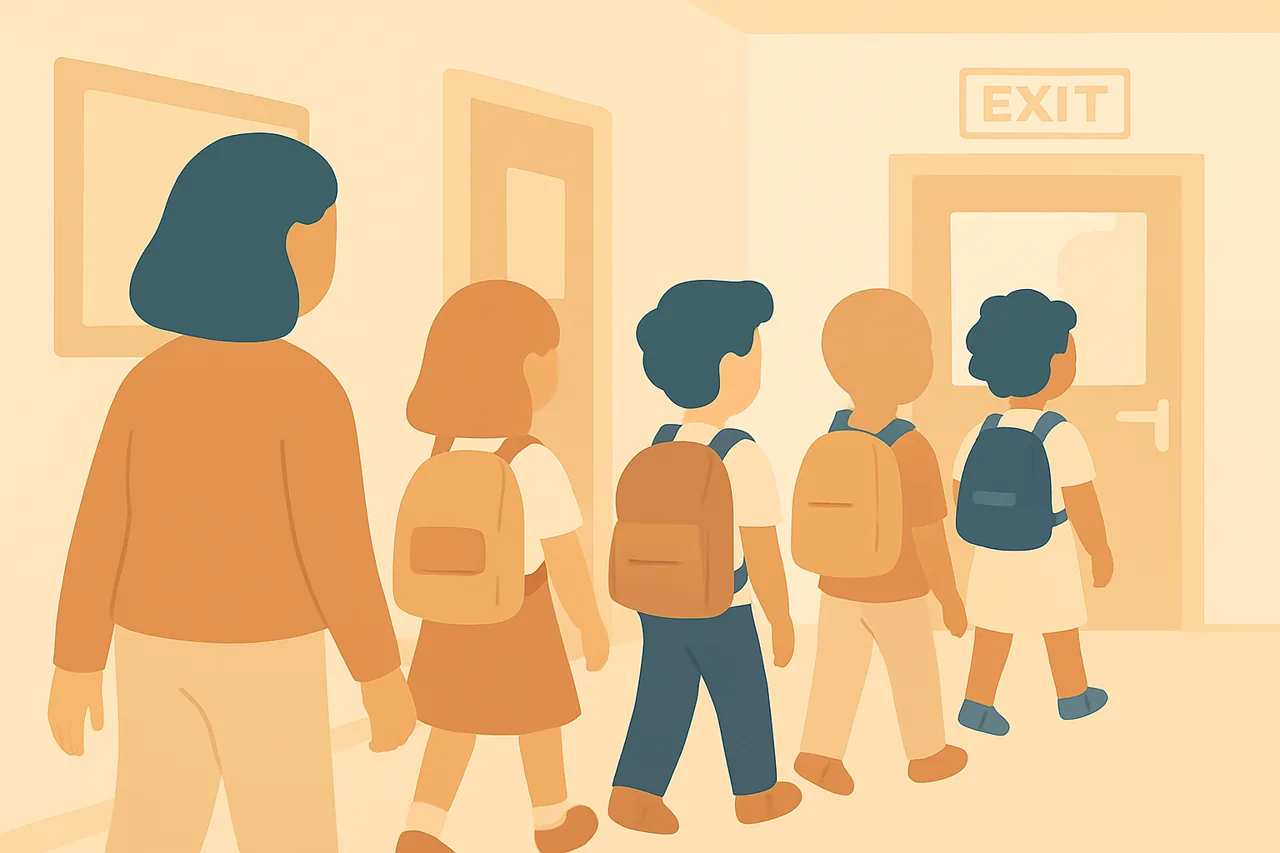
Why is a new classroom so hard for an autistic student?
A new classroom changes almost every predictable thing at once. New room, new teacher, new seat, new routine, and new peers all arrive on the same morning. For a student who relies on sameness, that stack of unknowns reads as a single large threat. A social story does not remove the change. It turns one big unknown into a few small, described, expected things, which is exactly what lowers the alarm.
What four parts does the story need?
Map each part to one unknown. Keep one idea per page so a young or non-reading student stays with you.
| Part | The unknown it answers | Example line |
|---|---|---|
| The room | Where will I be? | "This year my classroom is Room 12. It has a reading corner and cubbies by the door." |
| The teacher | Who is in charge? | "My teacher is Ms. Lopez. Ms. Lopez helps me learn and keeps me safe." |
| The schedule | What happens, and when? | "Every day we have morning meeting, then work time, then recess. My schedule shows what is next." |
| The coping step | What if I feel unsure? | "If I feel unsure, I can look at my schedule or ask Ms. Lopez for help." |
Notice the language. Each line is descriptive and calm, the teacher line is a perspective sentence, and the coping line is a single gentle directive. That ratio keeps the story aligned with the Carol Gray methodology, which leans on description and limits directives to one clear action.
Should you use real photos of the new room?
Yes, whenever the new teacher can send a few. A student has never seen this room, so a photo of the actual door, cubby, and reading corner does more than any illustration. Ask the new teacher for three or four phone photos before the first day. Schools fall under FERPA, so store those photos on a district-managed drive and use the student's first name only in the file.
From the same 2024 survey, the top complaint was blunt: "Too long, that's why I don't make them." A start-of-year story is the easiest one to skip and the worst one to lose, because the student meets the change with no preparation. A reusable four-part scaffold is the fix. You write the frame once and swap the room, teacher, and photos per student.
How early should the story go home?
One to two weeks before the first day. The benefit comes from repetition, not from a single bedtime reading. The 2024 ASSSIST-2 cluster randomized trial of 249 autistic children found a larger effect for students who used social stories across at least six sessions, which points to the same rule here: more calm readings before the event, better odds on the day. Send the story home with a short note asking the family to read it once a day.
Does a new classroom social story actually help?
It can, within limits. AFIRM lists social narratives as an evidence-based practice for autistic learners, and a 2026 Frontiers in Psychology meta-analysis of 21 studies reported a moderate effect that did not depend on whether the story was digital or printed. A social story may reduce first-day uncertainty. It will not guarantee a calm morning on its own. Pair it with a visual schedule, a familiar adult at drop-off, and a planned break space.
How do you reuse this story next year?
Save the four-part frame as a scaffold, not a finished story. Every August the room, the teacher name, and the photos change, but the structure does not. That is how a school SLP covers an entire caseload of new placements without writing from a blank page each time. Build the frame once, personalize three details, and the start-of-year story stops being the task that arrives in October.
Frequently Asked Questions
When should I send home a new classroom social story?
Send it one to two weeks before the first day, while there is still time to re-read it daily. A story read once the night before has little dosage. The student needs several calm readings to build a clear picture of the new room and teacher.
What should a new classroom social story include?
Cover the four unknowns that drive most start-of-year anxiety: the new room, the new teacher, the daily schedule, and what to do when the student feels unsure. Keep it concrete, name the teacher, and end with one clear coping step the student can use.
Should I use real photos of the new classroom?
Yes, when you can get them. A photo of the actual room, door, or cubby beats any illustration for a place the student has never seen. Ask the new teacher for a few phone photos before the first day, and stay inside FERPA by storing them on a district-managed drive.
How long should a start-of-year social story be?
For a K-5 student, aim for one short idea per page across five to eight pages. Long stories lose attention before the coping step lands. One scene per page, paired with a picture, keeps a young or non-reading student with you.
What if the student still melts down on the first day?
A social story lowers uncertainty, it does not guarantee a calm first day. Pair it with a visual schedule, a familiar adult at drop-off, and a planned break space. The story primes the student. The supports around it do the rest.
Can I reuse the same story for the next student?
Keep the structure as a reusable scaffold and swap the specifics. The new room, the teacher name, and the photos change per student, but the four-part frame stays the same. That is how you cover a whole caseload without writing from scratch each August.
Does the story replace a transition meeting with the family? (Updated July 2026)
No. A 2024 study of primary-school transitions for autistic students found that teacher-provided support and parent concerns frequently do not match, and that individualized planning plus school-home collaboration drives smoother moves. Treat the new-classroom story as a shared artifact that carries the same details home, not as a substitute for the conversation. Send it early enough that the family can add what you missed.
One approach for school SLPs short on time is to keep a 5-tool stack: a methodology checklist, a slide template you reuse, a folder of stock photos sorted by scenario, an AI text drafter (ChatGPT, Claude, MagicSchool, or Emoquest for one-sentence-in story output), and a delivery format your district already uses (Google Slides or PDF). Build the four-part new classroom frame once, drop in this year's room, teacher, and photos, and every student on your caseload can start the year with a story instead of a surprise.