To write a social story for riding the school bus, cover six page beats in order: waiting at the stop, getting on, finding a seat, the ride, getting off, and what happens next. Name the loud engine and the other students directly, say the noise is expected, and give the student one coping option. In a 2024 community survey of 16 parents, school SLPs, OTs, and special educators, 94% reported spending 30 or more minutes on a single social story, so a reusable bus scaffold saves you the most time. The approach is current practice, not just theory: at the November 2025 TSD Conference, transportation-safety experts highlighted personalized bus social stories that use the student's own name and photos, paired with visual demonstrations, as a leading way to prepare autistic students for boarding, seating, and safety rules.
Why is riding the school bus hard for an autistic K-5 student?
The bus stacks several hard things at once: unpredictable noise, close seating with peers, motion, and a driver the student may not know well. For many autistic students the sensory load is the real barrier, not the route. A bus social story works because it makes the sequence predictable before the student is in it, which is the proactive priming social narratives are designed for.
What are the page beats of a school bus social story?
Map one beat to one page. This keeps the story short enough that a K-5 student can sit through it before boarding.
| Page | Beat | What the sentence does |
|---|---|---|
| 1 | Waiting at the stop | Describes when and where the bus comes |
| 2 | The bus arrives and the door opens | Names the engine noise and says it is expected |
| 3 | Getting on and finding a seat | States the seating rule (assigned seat or buddy) |
| 4 | The ride | Names other students, talking, and the bumps |
| 5 | Getting off at school | Describes the cue to stand and walk off |
| 6 | What happens next | Connects to a familiar routine (class, breakfast) |
Keep the 2:1 ratio of descriptive or perspective sentences to directive sentences from Carol Gray methodology. A bus story that reads as a list of "I will sit still" lines is closer to a behavior plan than a social story. Describe what happens first, then add at most one gentle directive.
What worries should the bus story actually address?
Pull these from the student's profile, not a generic template. The most common bus worries for K-5 students:
- Noise. The engine, the brakes, and other students. Name each one and pair it with a coping option (headphones, a fidget, a seat near the front).
- Where to sit. Assigned seat removes the daily guess. If seating is open, give a simple rule like the first open seat near the driver.
- Who is there. Name the driver and, if there is one, the bus aide. A perspective sentence ("the driver helps everyone stay safe") supports theory of mind.
- Getting off at the right stop. Describe the cue the student watches for so the student is not tracking it alone.
From the same 2024 community survey, the photos problem: "Getting suitable pictures is 90% of the work." For a bus story, one photo of the real bus and the real stop does more than a page of perfect text. Take those two photos once and reuse them for every bus story you write this year.
Does the research support a bus social story for school routines?
Social narratives are reviewed as an evidence-based practice for autistic K-12 students by AFIRM and the National Clearinghouse on Autism Evidence and Practice (NCAEP). In a 2024 multi-site cluster randomized trial, ASSSIST-2, of 249 autistic children across 87 schools, students using social stories met their individual socio-emotional goals significantly more often than peers in usual care, and the trial described the approach as low-cost and low-burden. A bus routine is a good fit: it is concrete, repeats daily, and has a clear sequence. A social story may help the student board with less anxiety, though it works best paired with practice and a consistent seat.
What does the 5-step workflow look like for an SLP?
- Pull the profile. Student name, grade, the one sensory trigger that matters most, and the seating situation (assigned or open).
- Take two photos. The real bus and the real stop, if you can get them. Generic photos are the backup.
- Draft the six beats. One per page, two descriptive or perspective sentences each, one directive in the whole story.
- Add the coping option. Put it on the noise page: headphones, a fidget, or a front seat.
- Audit. Read once for the Gray ratio, once for student-specific vocabulary, and once to replace any "I will not" line with a cooperative line ("the driver will help me if I feel worried").
Frequently Asked Questions
How long should a bus social story be for a K-5 student?
Four to six pages, one beat per page: waiting at the stop, getting on, finding a seat, the ride, getting off, and what comes next. That is roughly 8 to 12 sentences. Keep most sentences descriptive and use at most one directive sentence for the whole story.
What is the most important worry to cover in a bus social story?
For most autistic K-5 students it is sensory load: the engine noise, other students talking, and the bump of the ride. Name the noise directly, say it is expected, and give one coping option such as headphones or a fidget. Seat assignment and where to sit are the next most common worries.
Should the bus story say which seat the student will sit in?
If the student has an assigned seat, name it. Predictability lowers anxiety. If seating is open, describe a simple rule the student can follow, such as sitting in the first open seat near the front or sitting with a named buddy.
Can a paraprofessional or bus aide read the bus story with the student?
Yes. Read it before the situation, not on the bus. Research on social stories has not found that effectiveness depends on which adult delivers the story, so a trained para, aide, or caregiver reading it at home or before boarding works well.
Should I use real photos of the actual bus?
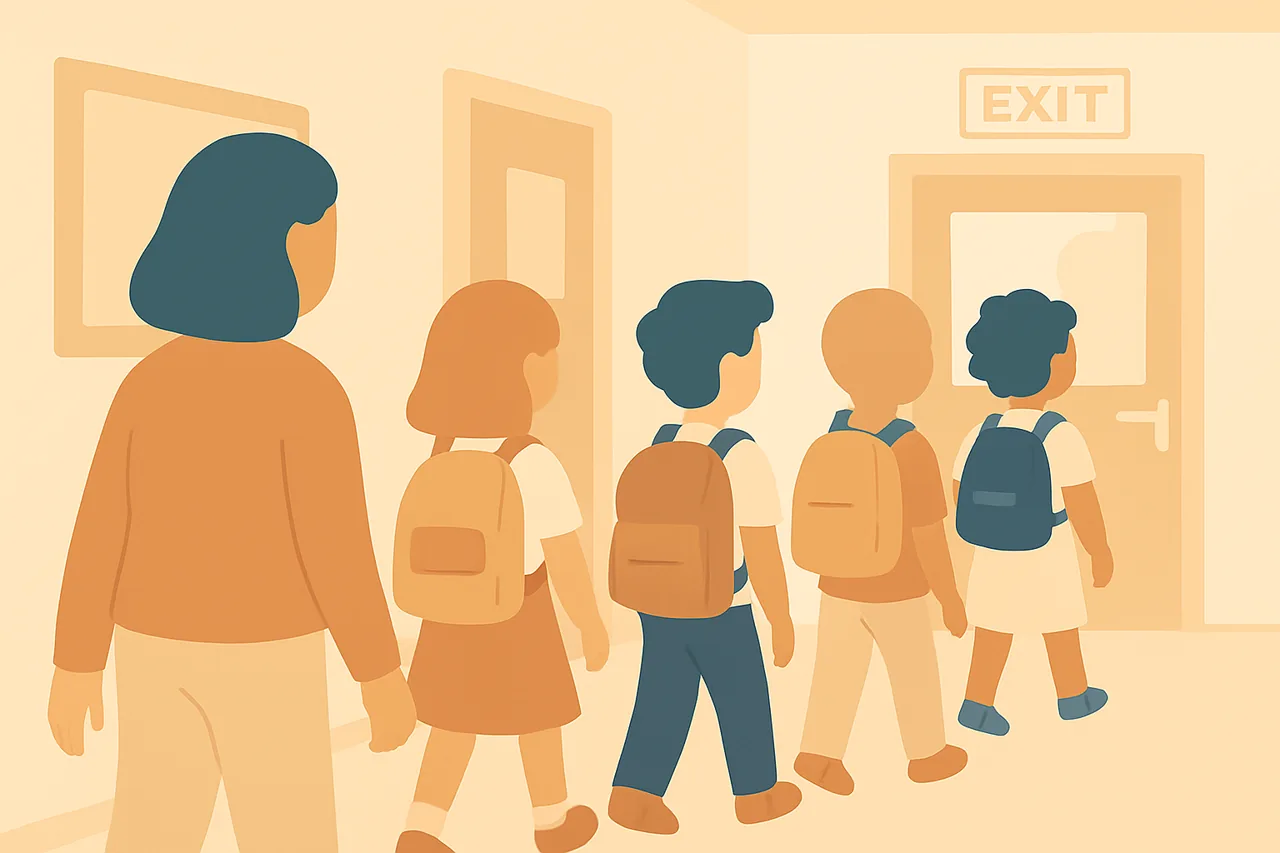
When possible, yes. A photo of the real bus, the real stop, and the door generalizes better than clip art for K-2 students. If you cannot get photos, use generic photos of a similar bus and stop, or flat illustrations that show the student from behind.
How often should the student read the bus story?
Read it two to three times before the first ride, then on a regular schedule (often before each ride for the first week or two) until boarding becomes routine. Then fade to once a week, then as needed. The story primes the routine, it does not replace it.
What are transportation-safety experts recommending for bus prep? (Updated July 2026)
At the November 2025 TSD Conference, safety experts pointed to personalized social stories that use the student's name and real photos, plus visual demonstrations with figurines, to teach boarding, seating, and safety rules. The emphasis was on individualized, compassionate prep over generic rule lists. That matches the fill-in-the-slots approach in this article: keep the six beats fixed and swap the student-specific detail.
One approach for school SLPs short on time is to keep a 5-tool stack: a methodology checklist (the Gray ratio), a slide template you reuse, a folder of stock photos sorted by scenario (a bus photo lives here), an AI text drafter (ChatGPT, Claude, MagicSchool, or Emoquest for one-sentence-in story output), and a delivery format your district already uses (Google Slides or PDF). The bus story does not need to be perfect. It needs to ship and be re-read before the ride.