A substitute teacher social story for a K-5 autistic student should be 4 to 6 pages, written in the present tense, and kept in the sub folder so the paraprofessional or related-service provider can read it the morning of the absence. The story should follow the Carol Gray 2:1 ratio (at least 2 descriptive, perspective, or affirmative sentences per directive). In a 2024 community survey of 16 school SLPs, OTs, and parents, 94% reported spending 30 or more minutes writing a single social story, so build one reusable substitute story per student per year and stop rewriting from scratch. A 2025 study on school-related uncertainty and anxiety found autistic students report significant anxiety when facing unexpected changes at school, including a change of teacher, which is exactly the gap a pre-written substitute story is meant to close. The 2025 ASSSIST-2 trial, run across 87 schools with 249 autistic children aged 4 to 11, points at how to judge one of these: broad social responsiveness did not move significantly, but children in the social stories group met their individual contextualised goals significantly more often than the usual-care group (0.97, 95% CI 0.21 to 1.73, p = 0.012). Write the substitute story against one named goal, not against "a better day."
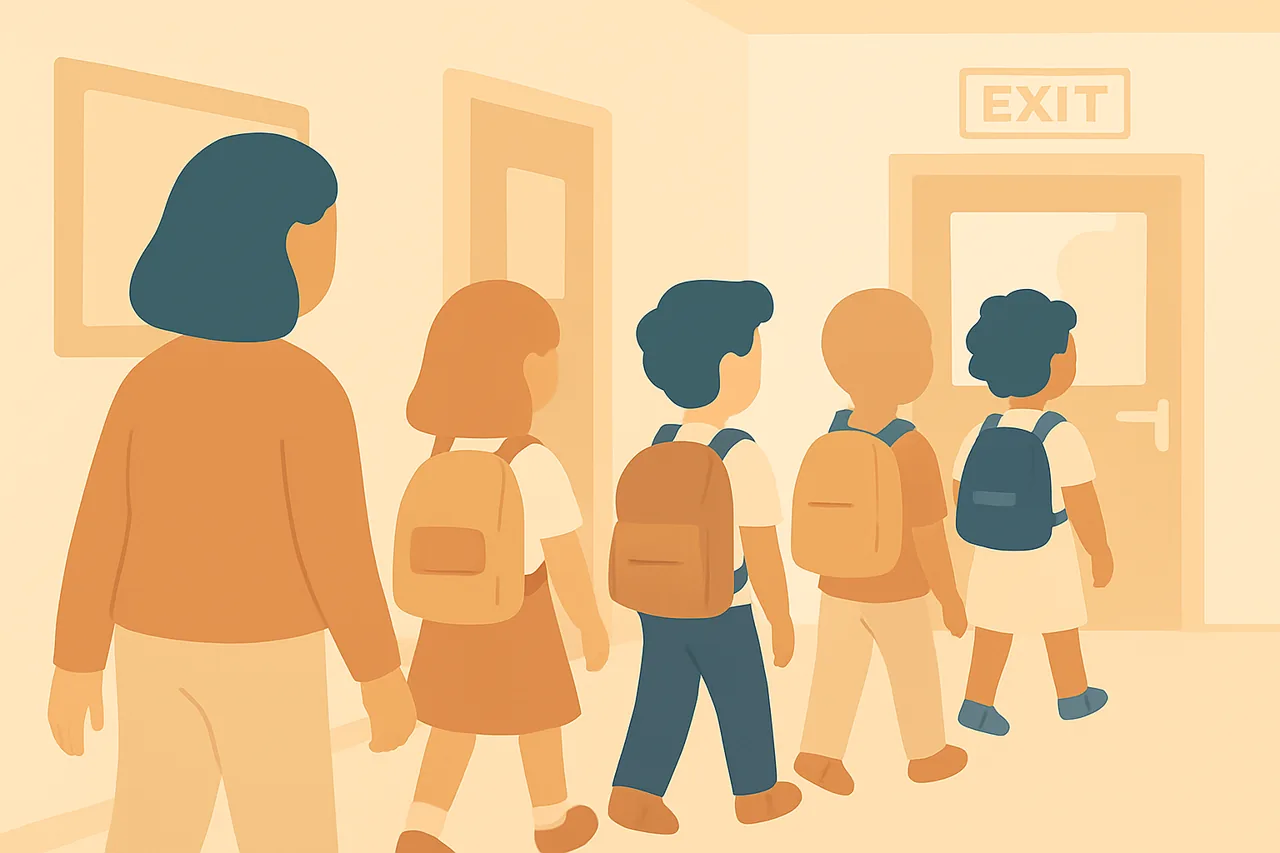
Why does a substitute teacher need a social story at all?
A change in the regular adult is one of the highest-yield triggers for behavior escalations in autistic K-5 students. The story is a priming intervention, not an in-the-moment one: read it before the situation, not during it. AFIRM and the National Clearinghouse on Autism Evidence and Practice (NCAEP) classify social narratives as an evidence-based practice for autistic learners ages 3 to 22, and transitions (including changes in adults) are one of the most common targets.
What should a 6-page substitute teacher story include?
A reusable scaffold most school SLPs in r/slp keep on file:
| Page | Beat | Example sentence (descriptive unless noted) |
|---|---|---|
| 1 | Title + what is happening | Sometimes my teacher cannot come to school. When this happens, a substitute teacher comes to my class. |
| 2 | Who the sub is | A substitute teacher is a grown-up who helps our class for the day. |
| 3 | What is the same | The classroom is the same. My desk is the same. My friends are the same. |
| 4 | What is different | The substitute may say my name in a new way. The substitute may not know all of my routines yet. (perspective) |
| 5 | Who can help me | My paraprofessional knows me. My SLP and OT still come to see me. (cooperative) |
| 6 | What I can try | If I feel worried, I can use my quiet hand signal or ask my paraprofessional for a break. (directive) |
Sentence tally on the scaffold: 7 descriptive, 1 perspective, 1 cooperative, 1 directive. Ratio: 9 informing sentences to 1 directive. Well above the 2:1 minimum.
What script should the student use to ask the substitute for help?
One scripted line, taped to the inside of the desk, beats a long list of "what ifs." For K-1, the script can be a picture card the student hands the sub. For grades 2 to 5, a single rehearsed line works:
- K-1 picture card: "I need my para." (with a small photo of the para)
- Grades 2 to 5 rehearsed line: "My regular teacher uses a different way for this. Can my paraprofessional help me?"
The CHOP Center for Autism Research's guidance on supporting autistic students through routine changes reinforces that one prepared self-advocacy script reduces behavior escalations more than a long list of class rules.
Why this matters: From the 2024 community survey, the photos quote is the one most repeated by SLPs about scenario stories: "Getting suitable pictures is 90 percent of the work." For a substitute story, you do not have a photo of the substitute. Use a flat illustration of a generic adult or skip the substitute's image entirely. The story still works.
What does the sub folder need to actually use the story?
The story is one item in a small kit. The Nebraska ASD Network's social stories implementation guidance recommends pairing the narrative with a visual schedule and a designated person who will deliver it. A minimum sub kit for an autistic student in your room:
- The printed social story, 4 to 6 pages, in a clear sleeve.
- A one-page student profile (name, communication mode, top 2 triggers, top 2 calming strategies).
- The visual schedule for the day, with the substitute square already in place.
- The break-card or hand signal the student already uses.
- A sticky note that says "Read the social story with [name] at arrival. Do not read it yourself. Find the paraprofessional or call the SLP."
How early should you build this story?
In the first 4 weeks of the school year, before the first cold or jury duty notice arrives. The story does not need a specific substitute's name, so it can be written generically once and re-used for every absence. One reusable story per student per year is the workflow that actually ships.
Frequently Asked Questions
How long should a substitute teacher social story be for a K-5 student?
Four to six pages, roughly 8 to 12 sentences. A K-1 student can lose attention after 4 pages. Upper elementary students can sit through 6, sometimes paired with a visual schedule of the day.
When should the student read the substitute story?
The morning of the substitute, before the day starts, is the priming dose that matters. If the substitute is planned in advance (a medical absence, jury duty), read it 2 to 3 times in the days before. If the absence is sudden, the paraprofessional or related-service provider should pull the story from the sub folder and read it during arrival.
Should the substitute teacher read the story to the student?
Ideally no. The substitute usually does not know the student well enough to deliver a social story with the right pacing or follow-up questions. A paraprofessional, classroom teacher, or related-service provider who knows the student should read it. The substitute should know the story exists and what coping script the student will use.
What sentence ratio should the story use?
Carol Gray methodology asks for at least 2 descriptive, perspective, or affirmative sentences for every directive sentence. A 10-sentence substitute story might use 7 descriptive, 1 perspective, 1 cooperative, and 1 directive.
Should I name the substitute teacher in the story?
Only if you know the name in advance and the same person will be in the room. Otherwise use a placeholder like "a new grown-up" or "a substitute teacher." Naming the wrong sub is one of the fastest ways to break a story's accuracy, which violates the Gray methodology.
Do I need a different story for each new substitute?
No. One reusable substitute teacher story works for the whole school year if the language is generic ("the substitute" rather than a specific name). Swap in a photo or first name only when you know the sub in advance.
Can a paraprofessional deliver the substitute story?
Yes, and it is usually the right choice. Paraprofessionals know the student, the routines, and the calming cues. The classroom SLP or special education teacher writes the story; the para delivers it. Train the para once on the pacing (pause after each page, let the student answer or point) and the story can be re-used for every absence.
How much does a substitute day actually raise a student's anxiety? (Updated July 2026)
A 2025 study on school-related uncertainty and anxiety found autistic students report considerable anxiety when facing unexpected changes at school, and a change of teacher was named directly. The study points to predictable, school-based supports as the fix, which is exactly what a pre-written substitute story provides before the sub ever walks in.
What outcome should I expect from a substitute story? (Updated August 2026)
Movement on one named goal, not a generally calmer day. In the 2025 ASSSIST-2 trial across 87 schools and 249 autistic children aged 4 to 11, broad social responsiveness did not change significantly, while children in the social stories group met their individual goals significantly more often than the usual-care group. Pick the goal before you write the story.
One approach for school SLPs short on time is to keep a 5-tool stack: a substitute story scaffold (the table above), a visual schedule template you reuse, a folder of generic classroom photos, an AI text drafter (ChatGPT, Claude, MagicSchool, or Emoquest for one-sentence-in story output), and a sub folder routine your school already follows. The substitute story does not need to be perfect. It needs to live in the folder before the first absence.